Short answer
If this is your usual active flare, do three things first: unload the joint, remove pressure, and use the rescue plan written for you. If this is a first hot, swollen joint or the pattern includes fever, chills, wound, trauma, severe illness, immune suppression, fast worsening, or a different joint pattern for you, get same-day medical evaluation before treating it like routine gout. Tonight's job is narrow: protect the joint, make sleep possible, record the start, and save trigger detective work for later.
Evidence label: flare medicine categories and escalation routing are standard-care anchored; cannabis and cannabinoid options below are mechanism or early-evidence adjuncts, not proven human gout-flare protocols.
Check this before you settle in
This check is not about being scared. It is about sorting the problem correctly before you commit to a gout plan.
Get same-day medical evaluation if any of these are true:
- this is your first hot, swollen joint
- fever, chills, or feeling systemically sick
- a wound, broken skin, or possible infection near the joint
- recent trauma, fall, puncture, or new injury
- severe illness or immune suppression
- a joint pattern that is different for you
- new inability to bear weight or use the joint in a way that is different for you
- pain, heat, swelling, or function is worsening fast despite the plan
The practical sentence is:
I need this checked as possible infection, injury, or another arthritis pattern before treating it like my usual flare.
If none of those fit and this feels like your usual gout pattern, start the actions below now. For many flare plans, especially colchicine, earlier use works better than waiting until the pain peaks.
Do these now
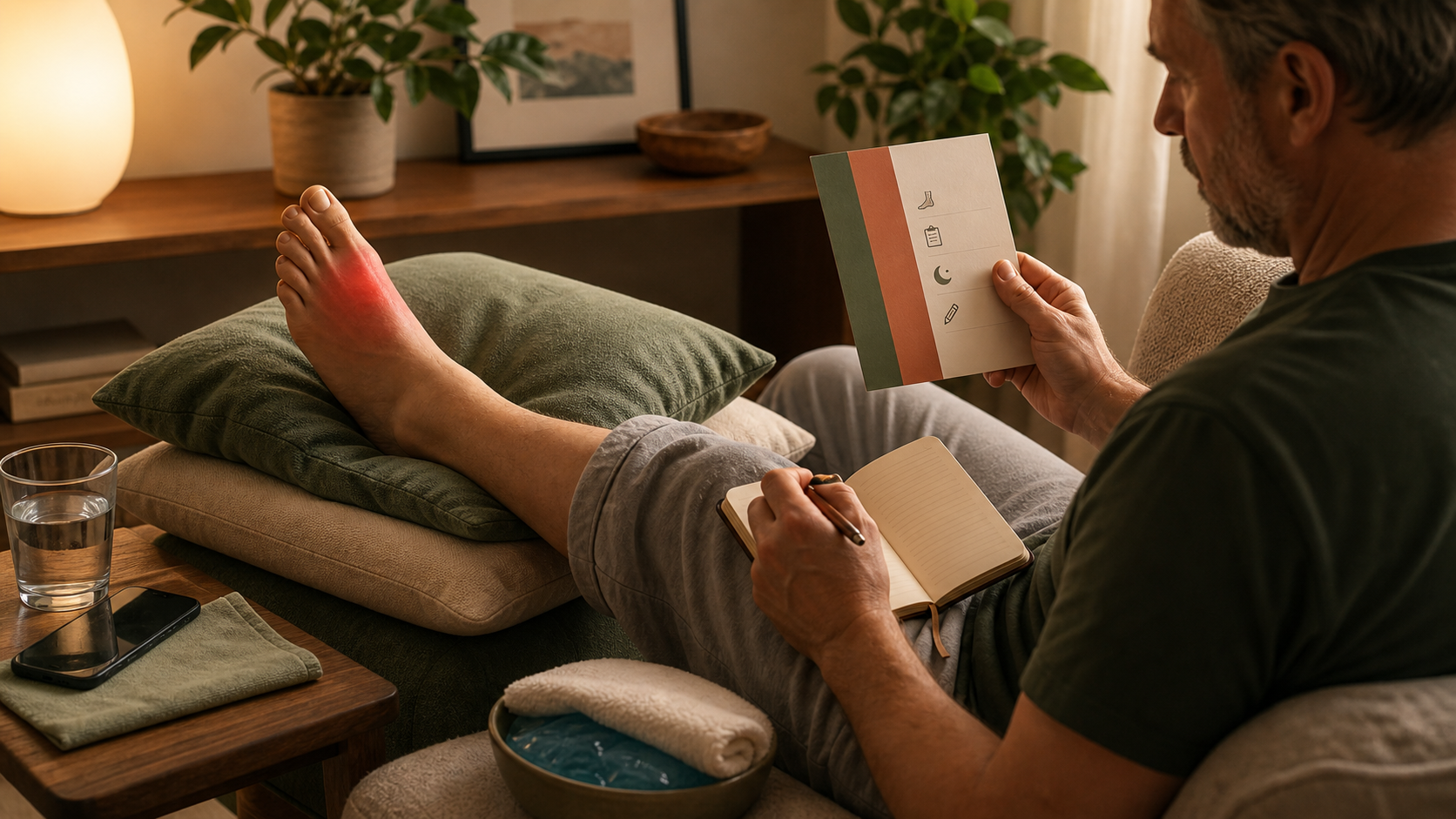
1. Unload the joint
Stop making the painful joint prove anything.
For a foot, toe, ankle, or knee flare, get off it as much as the day allows. Change the sock, shoe, sheet, or brace if pressure is making the joint pulse. Elevate if that helps.
For a hand, wrist, elbow, or shoulder flare, stop the repeated motion and the loaded grip. Set the joint down before it starts guarding every movement around it.
2. Cool the joint
Use cold only in the form the joint can tolerate. In a full flare, direct pressure from an ice pack may be impossible.
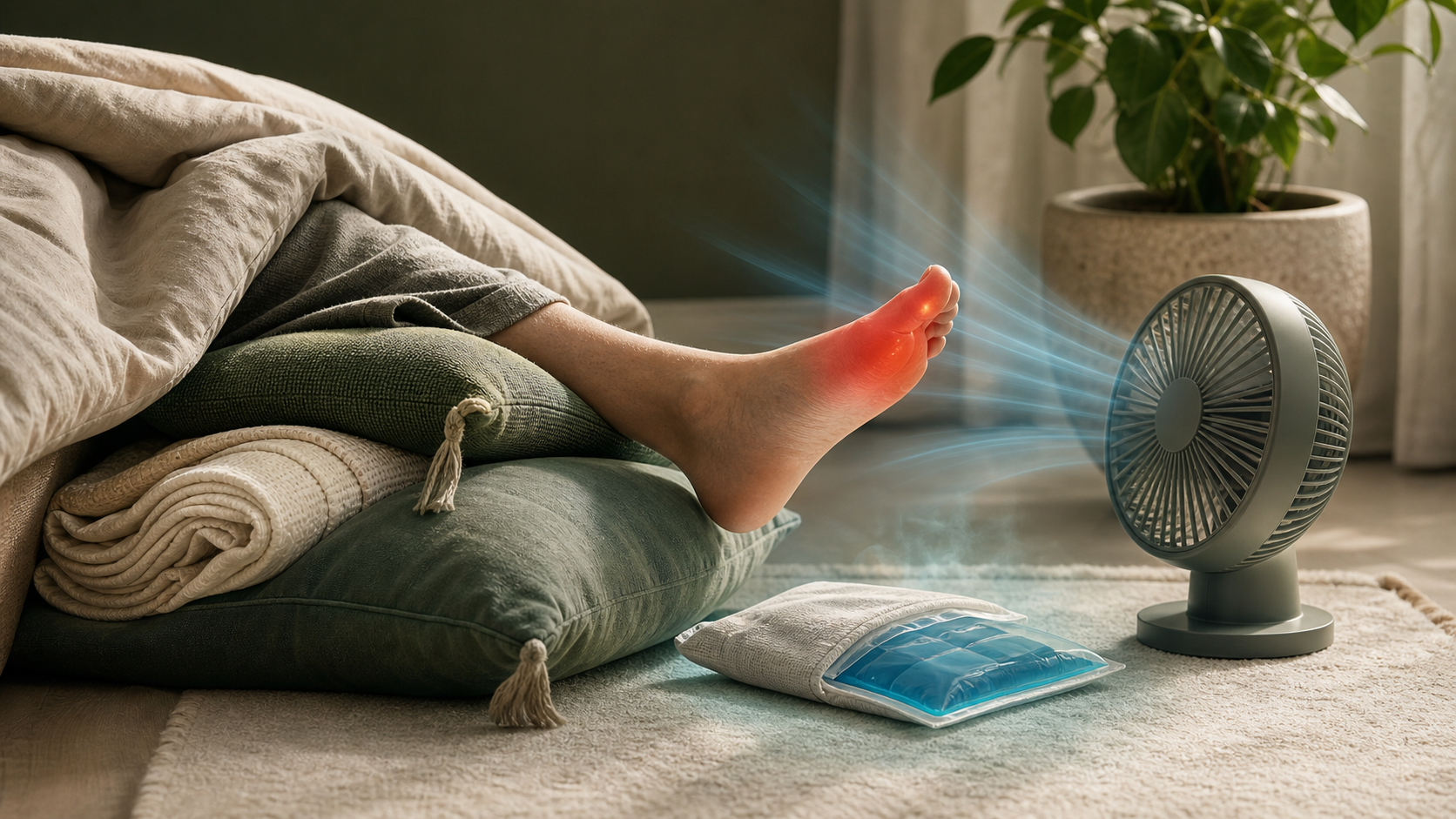
Options, from least contact to most contact:
- cool the room or use a fan near the uncovered joint
- rest the joint near a cold pack without pressing into it
- put a cold pack on the floor and rest the sole lightly on it if that is tolerable
- cool around the joint rather than on the most sensitive spot
- use a wrapped pack for short cycles once touch is tolerable
Check the skin, especially if sensation is reduced. Cold is a tool, not a toughness test. If every version increases pain, skip it and focus on unloading, pressure relief, and the rescue plan.
3. Use the flare plan that fits
If you already have a written rescue plan, use it as written.
The usual flare-medicine categories are NSAIDs, colchicine, and corticosteroids. IL-1 beta pathway blockers are a specialist or refractory option when the usual categories fit poorly or have failed. Fit depends on kidney function, stomach bleeding or ulcer history, blood pressure, diabetes or glucose risk, immune and liver status, current medicines, and prior response.
Source label: standard-care anchors support the main flare medicine categories and the fit-check questions. They do not replace the prescribing instructions written for one person.
If the medicine was prescribed for your gout rescue plan, follow the prescribing instructions you were given. If all you have is an OTC pain reliever or an old or unclear prescription, treat that as "no clear rescue plan": use only what fits the label and your known risks, then bring the missing question forward: "At what first sign do I use my rescue plan, which category fits my risks, and what response should I expect by tomorrow?"
If you keep having severe flares or keep needing steroid tapers, save this for the follow-up: "Would an IL-1 option such as anakinra ever fit my rescue plan, and what prevention bridge would travel with it?" Do not solve that in the middle of tonight's pain. Use it to make the next medication conversation sharper.
4. Keep the episode simple
Keep water nearby. Eat simple food you tolerate. Keep alcohol, fasting, dehydration, heat stress, and hard lower-body work out of this episode.
This is not the moment to prove a trigger theory. The job right now is to reduce the load on the joint and interrupt the inflammatory climb.
5. Set up sleep before bedtime
Sleep during a full flare is a logistics problem. The joint may need zero contact.
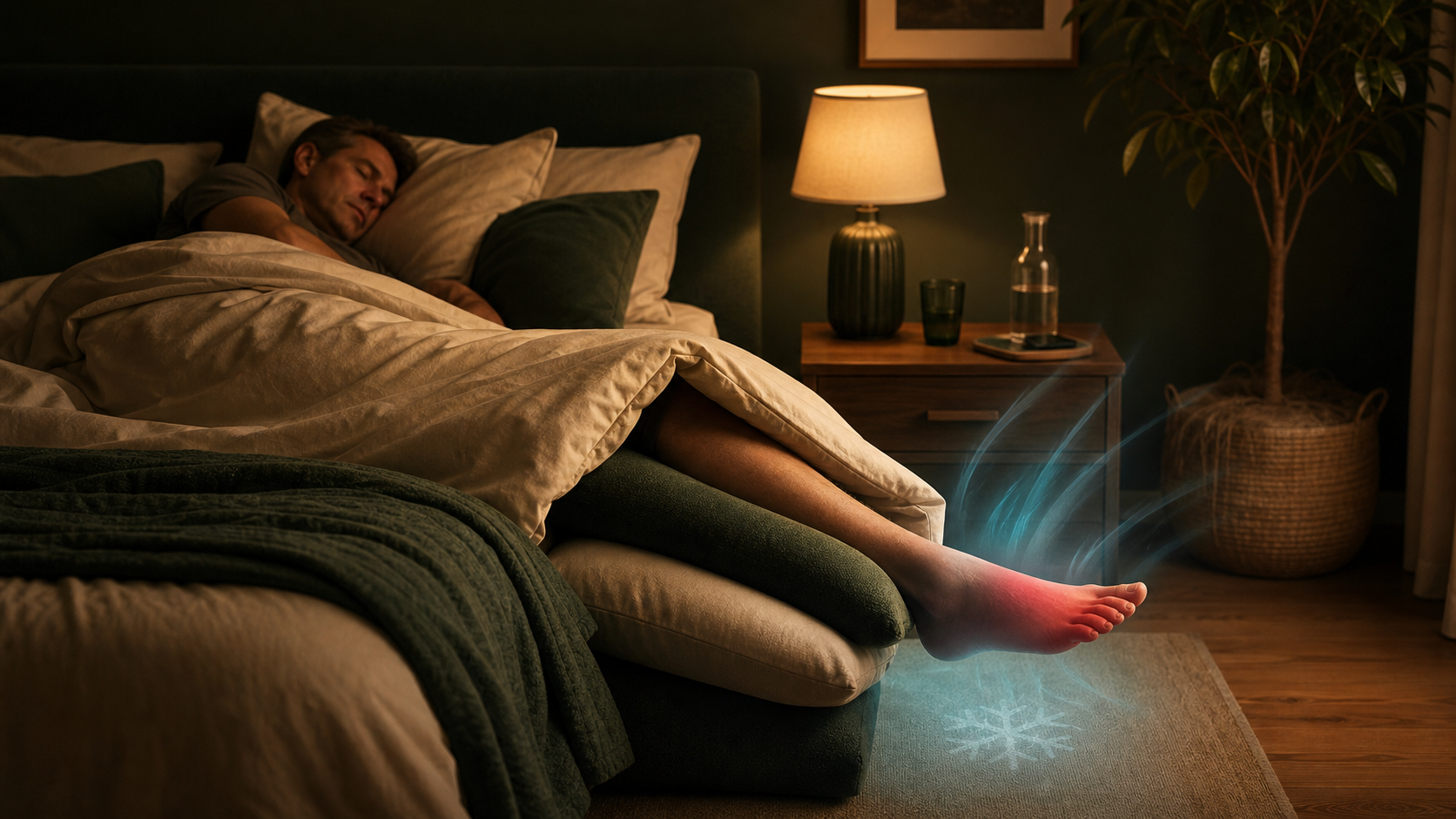
For a foot flare, the right setup may be foot outside the bed: calf on pillows, painful foot past the mattress edge, no sheet or blanket touching it, cool air nearby. If the foot stays in bed, use a pillow bridge, blanket tent, or rolled towel so bedding stays off the flare site.
Put water, medicine plan, phone, light, and bathroom path within reach. Clear the floor before you are half-awake.
Cannabis may help sleep and pain; cannabinoids and terpenes connect to CB2, P2X7, NLRP3, and IL-1 beta. Melatonin is sleep timing, not pain. Track product, route, timing, next-morning effect, impairment risk, and sedative or alcohol context.
Evidence label: cannabis and cannabinoid comments here are pathway and symptom-fit logic, not a proven gout-flare protocol. Melatonin belongs in the sleep-timing lane.
6. Record the start
Write down the date, time, joint, side, first symptom, pain level when noticed, pain level that made you act, and what you used. Memory gets worse as pain gets louder.
Use the flare record worksheet if you want the structured version.
If the pattern changes while you are treating it
A familiar flare can stop acting familiar. Pause the routine-flare assumption and get same-day evaluation if fever, chills, a wound near the joint, recent trauma, severe illness, immune suppression, fast worsening, or a new joint pattern shows up after you already started.
If your rescue plan is not producing the response you were told to expect, record what changed and move that question forward. The goal is not to be brave through a weird pattern. The goal is to notice when the problem changed lanes.
Choose by state, not bravery
If this is your usual prodrome
A prodrome is your early warning phase before the flare is fully loud.
Use the plan early. Your personal action threshold matters more than someone else's pain number.
For one person, pain moving from one to three may mean act now because the climb to eight is fast. For someone else, the baseline may already be higher. The useful signal is change from your own baseline: heat, pulse, stiffness, limp, shoe pressure, touch sensitivity, or the familiar upward slope.
After this flare, build the baseline ladder with the after-flare recovery guide or the baseline ladder worksheet: baseline, watch zone, action zone, flare zone.
If this is the first flare or the diagnosis is uncertain
The goal is not to guess perfectly at home. The goal is to get the right evidence.
Bring the joint, onset time, any fever or injury context, current medicines, and recent labs if you have them. Useful diagnostic questions include serum urate timing, whether the level should be repeated after the flare settles, whether joint fluid or imaging is needed, and what signs would change the plan.
Source label: standard-care anchors support checking diagnostic uncertainty, flare timing, and whether serum urate should be interpreted or repeated after the flare.
If flares are repeating
Repeated rescue use is a signal, not a failure.
The acute plan gets you through today. The prevention question comes next: what is keeping urate high enough, long enough, for crystals to form or persist, and what is making the immune system ready to flare?
Go to the prevention guide after the pain drops enough to think.
Where topicals and cannabis fit
Cold, elevation, pressure relief, and topicals are local symptom tools. They may help with pain and touch sensitivity while the systemic plan works, but they are adjuncts.
For cannabinoids, the evidence label is stronger than "relaxation": CB2, P2X7, NLRP3, IL-1 beta, and neutrophil recruitment are relevant mechanism lanes. Beta-caryophyllene has direct MSU animal evidence; CBD and THC are mechanistic and indirect. Missing: a proven named human gout-flare topical protocol. Track product, route, timing, pain, heat, swelling, skin reaction, and rescue-med need.
If touch becomes possible, use a sequence rather than pressure. Start with no-pressure cold or cool air. Apply a topical only to intact skin and only as close to the flare site as the joint allows. Wait, then return to cool air or a no-pressure cold setup. If the topical, rubbing, wrap, or cold contact makes the joint louder, step back to zero-contact cooling and unloading.
What to save for later
Save these for after the pain drops:
- trigger autopsy
- full supplement-stack redesign
- urate-lowering therapy strategy
- lower-body training
- the long visit agenda
Keep today's job narrow: protect the joint, use the plan, check whether the pattern is routine, and capture the record.
Quick flare record
Copy this into notes:
Date/time started:
Joint and side:
Usual pattern or new pattern:
Baseline for this joint:
First symptom:
Pain when noticed:
Pain when I acted:
Peak pain:
Heat/swelling/redness/touch sensitivity:
Prior 48 hours: alcohol, fructose, dehydration, fasting, illness, poor sleep, travel, hard exercise, injury, medication or supplement changes:
Rescue used: prescription, OTC, cold, topical, supplement, rest, elevation:
Meaningful relief time:
Rebound or next-morning change:
Serum urate result and timing, if available:
Follow-up question:
Where to go next
- If pain starts settling, use the after-flare recovery guide.
- If you are deciding whether upper-body training fits during a foot flare, use the exercise-during-flare guide.
- If you need to understand why crystals can be quiet until the immune system reacts, read why crystals can flare.
- If you need the medication category map, use the gout medication guide.
- If this was your first flare, read the just-diagnosed guide when you can handle more than a few lines.
Sources and deeper reading
Mechanism source links:
- Gout action guide
- Gout pathophysiology
- Colchicine
- NLRP3 inflammasome
- Complement C5a in gout
- Cannabinoids and terpenes
Standard-care anchors checked for this draft: